Las Vegas

Las Vegas

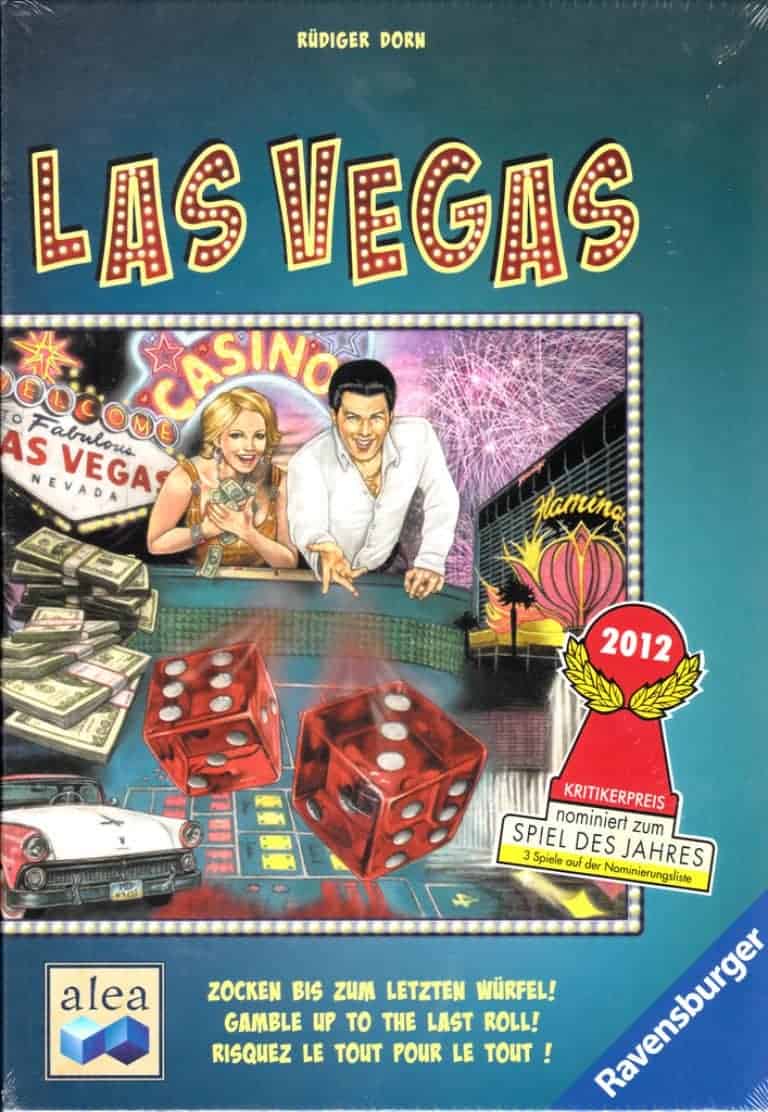
Developer Stefan Brück at alea describes Las Vegas as “an easy, dice-rolling, fun-and-luck game with a lot of interaction and ‘schadenfreude'”. Who doesn’t love schadenfreude? (Well, other than those being schadened, I suppose…)

In more detail, Las Vegas includes six cardboard casino mats, one for each side of a normal six-sided die. For each mat, players draw money cards until at least $50k is showing, but the amount may end up being a lot more, making that casino more desirable.

Each player has eight dice of a different color, which they take turns rolling. When you roll your dice, you can choose to place them on the relevant casino cards; for example, a die showing a 1 will be placed on the casino mat marked “1”. You must place at least one die per turn, although you may place more. All players take turns doing this until all the dice have been used. Finally, the player with the most dice on each casino card takes the money associated with it. In case of a tie, the next non-tied player takes the highest-valued money card at that casino.

Las Vegas rates a 1 out of 10 on alea’s difficulty scale.

Read More
Ugg-Tect

Ugg-Tect

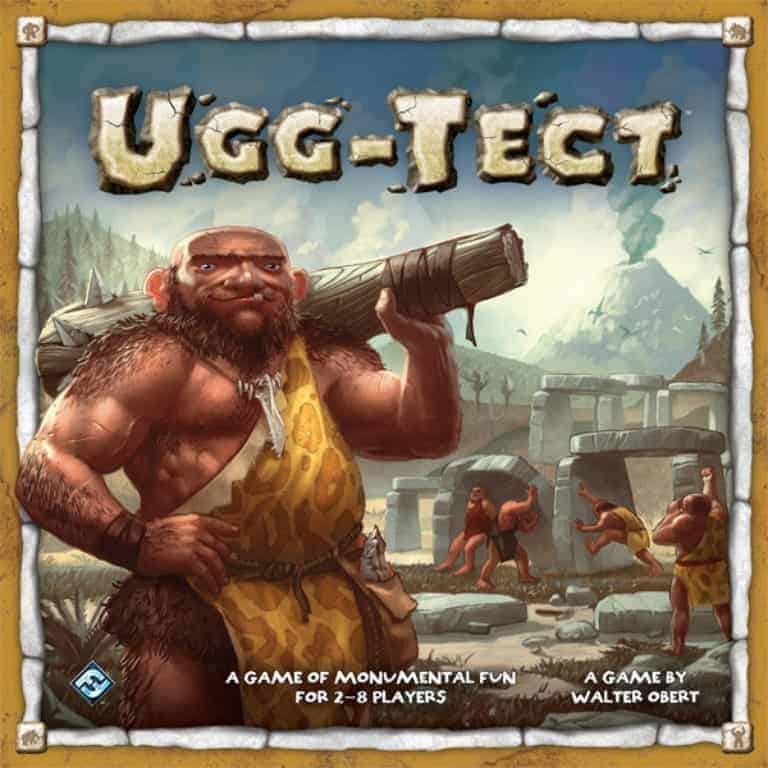
“Ugungu!” howled the caveman, a genius of his day. Club in hand, he stomped his feet meaningfully until his tribemates lifted the giant stone block. Thus, the first monument was born.

Club your tribemates to architectural domination! Ugg-Tect is a hilarious game of prehistoric architecture in which two teams, made of up to four player each, race to complete stone-aged structures. Leading each team is the charismatic ugg-tect, who must guide his workers to victory using nothing but a simple vocabulary of primitive grunts, a series of exaggerated gestures, and his trusty club.

Read More

Monikers

Monikers

Monikers is available exclusively through http://www.monikersgame.com/.

Monikers is a dumb party game for smart people. A game about naming the most inappropriate people and things you can imagine.

We’ve taken the basic formula from the classic guessing game Celebrity and tried to perfect it. The result: 400 of the weirdest, most interesting names we could think up over years of playtesting with friends.

Read More

Pairs

Pairs

Pairs is a “New Classic Pub Game” designed by James Ernest and Paul Peterson. You can play with 2 to 8 players, the rules are very simple, and each game takes about 5 minutes.

Pairs is a press-your-luck game. Each round, players take turns deciding whether to take a card or fold. Folding gets you some points, but catching a pair could get you a lot more points (and points are bad.) The first player to reach a target score loses the game.

Read More

Snake Oil

Snake Oil

In the Old West, sly snake oil salesmen had the special talent of getting even the most skeptical customer to buy the most dubious product. In Snake Oil, that’s exactly what the players get to do! One player draws a card and becomes the Customer while the other players each select two Word Cards from their hands to create a product to pitch to the Customer. Laughter erupts as each player attempts to persuade the Customer that their item is the best! The Customer picks their favorite item and that player is awarded the Customer Card. The player with the most Customer Cards wins!

Read More

Dobble

Dobble

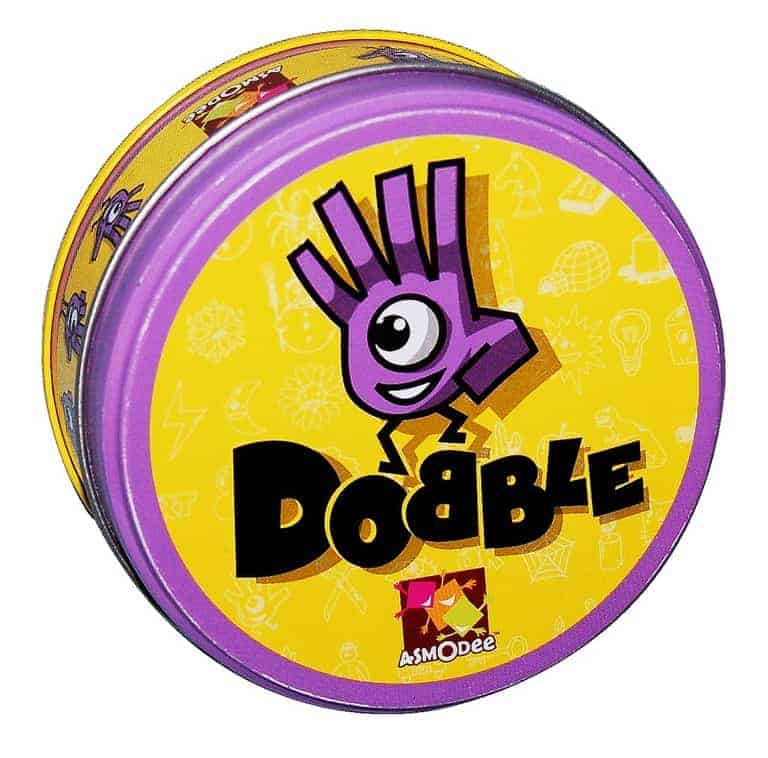
Dobble (called Spot It! in North America) is truly amazing. There is always one, and only one, matching symbol between any two cards! A sharp eye and quick reflexes is all it takes to play the 5 quick party games in this grab-n-go tin. The fast action and brilliant game mechanics will have you hooked. Quick to learn, fun for all ages, and including up to 8 players, Dobble is the best matching card game to use as an ice breaker.

Read More

Jungle Speed Safari

Jungle Speed Safari

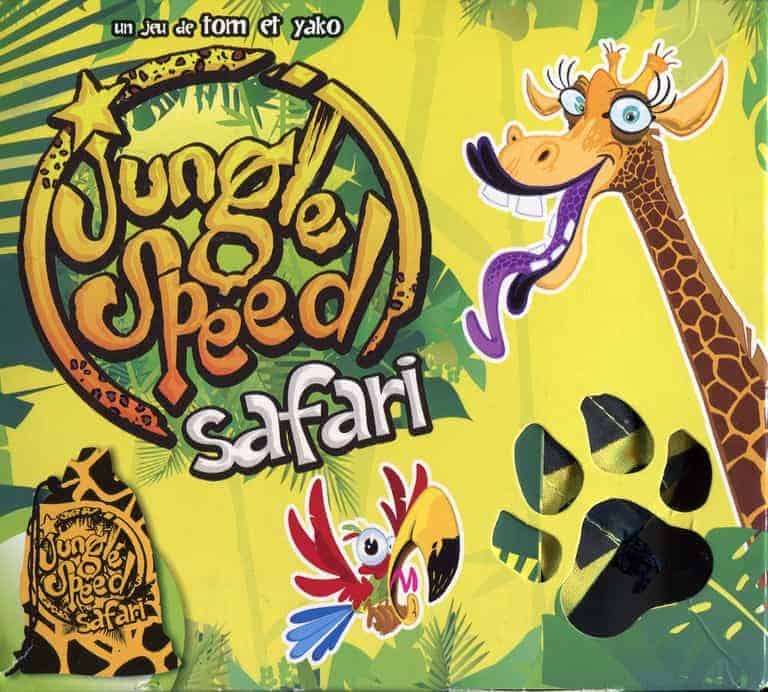
Normally, calm reigns supreme amongst the animals of the jungle. But when the time comes to eat, the animals gather round the forest of totems and their wild instincts take over. The hungriest animals race to catch their prey first. Others become angry and shout, whilst the chameleon hides. When the hunter appears, there is panic! The animals must protect themselves.

In turns, players flip the first card from their draw pile onto their score pile. Every card that is drawn eventually triggers an action. For example, if a player turns a hungry animal card, all players must race to grab the appropriate totem to satisfy the animal, the player that grabs the totem will add the hungry animal card to their score pile.

Read More

Skull

Skull

Skull is the quintessence of bluffing, a game in which everything is played in the players’ heads. Each player plays a face-down card, then each player in turn adds one more card – until someone feels safe enough to state that he can turn a number of cards face up and get only roses. Other players can then overbid him, saying they can turn even more cards face up. The highest bidder must then turn that number of cards face up, starting with his own. If he shows only roses, he wins; if he reveals a skull, he loses, placing one of his cards out of play. Two successful challenges wins the game.

Skull & Roses is not a game of luck; it’s a game of poker face and meeting eyes.

Read More

Concept

Concept

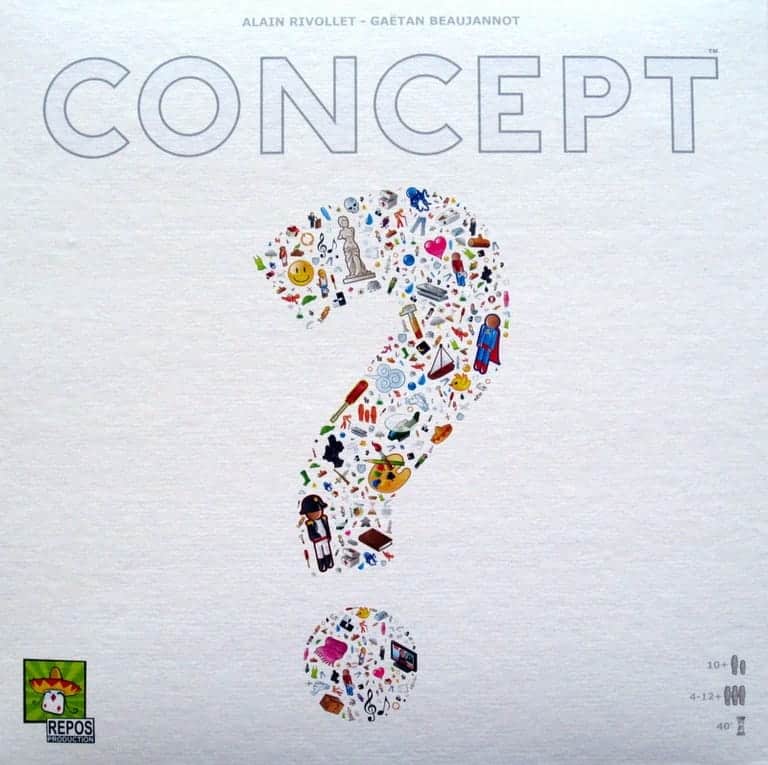
In Concept, your goal is to guess words through the association of icons. A team of two players – neighbors at the table – choose a word or phrase that the other players need to guess. Acting together, this team places pieces judiciously on the available icons on the game board. To get others to guess “milk”, for example, the team might place the question mark icon (which signifies the main concept) on the liquid icon, then cubes of this color on the icons for “food/drink” and “white”. For a more complicated concept, such as “Leonardo DiCaprio”, the team can use the main concept and its matching cubes to clue players into the hidden phrase being an actor or director, while then using sub-concept icons and their matching cubes to gives clues to particular movies in which DiCaprio starred, such as Titanic or Inception. The first player to discover the word or phrase receives 2 victory points, the team receives points as well, and the player who ends up with the most points wins.

Read More

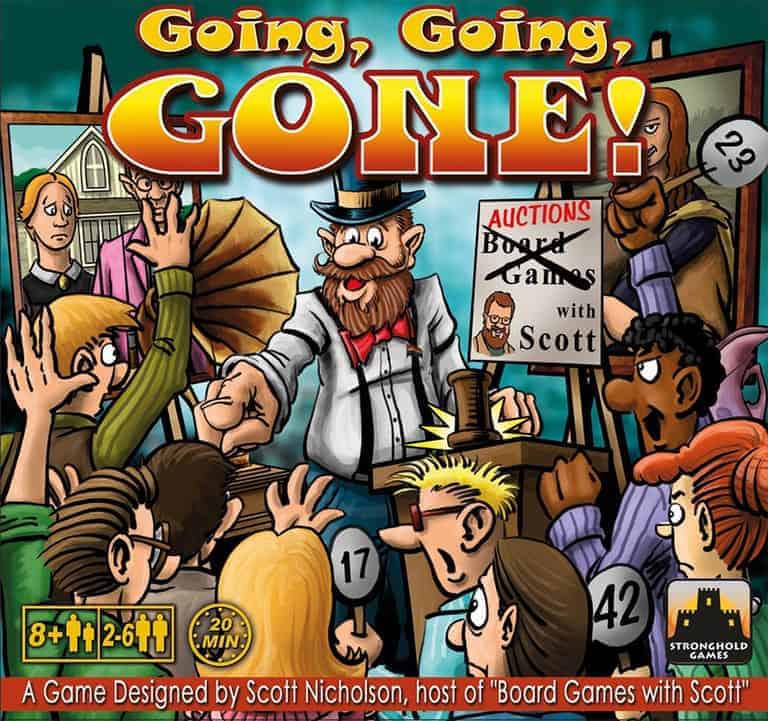
Going, Going, GONE!

Going, Going, GONE!

Can you keep calm while bids are rising? Experience the exhilaration of real life auctions!

In Going, Going, GONE!, players try to win items by bidding on five simultaneous auctions while the Auctioneer counts down from 10 to 1! Players bid on these five simultaneous auctions by physically dropping their wooden cubes (known as “Bucks”) into any or all of the five transparent Auction Cups, each of which represents an auction for one or two Item Cards.

At the end of the countdown, the Auctioneer says “GONE!” and quickly places the Auction Paddle over the five Auction Cups to close the auctions. The player who has the most Bucks in each Auction Cup wins that auction and takes the Item Cards for that auction. Collections of items may be sold throughout the game for more Bucks, or players can keep building their collections to sell them at the end of the game. The player with the most Bucks at the end of the game wins!

Going, Going, GONE! is a simple-to-learn, exciting and unique game for players of all skill levels! It is ideal for playing in public spaces. Since the players control the pacing of the game and the variants used, the game adapts to the playing style of the players.

Read More